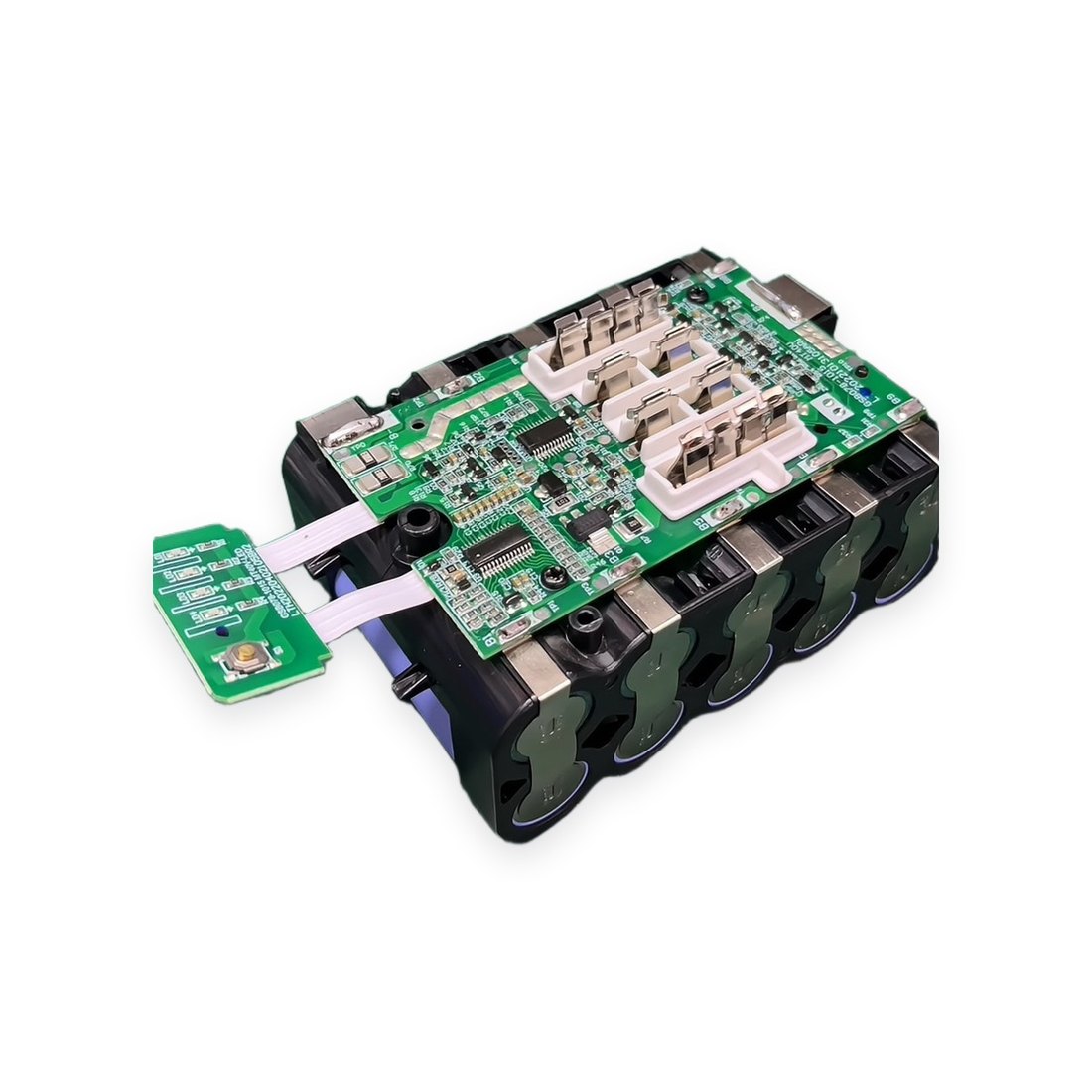
"Which cell do you recommend?" is the question we are asked most often. The answer never depends on which cell is best, but on what your product needs: burst power or runtime, low weight or long service life. Short answer first, then the reasoning.
1. The four cell types at a glance
| Cell type | Typical capacity | Energy density | Continuous discharge | Cycle life | Best suited to |
|---|---|---|---|---|---|
| 18650 | 2.0–3.5Ah | ~200–250Wh/kg | 3C standard; 10C+ power versions | ~500–800 cycles | Power tools, vacuums, compact packs |
| 21700 | 4.0–5.0Ah | ~250–300Wh/kg | 3C standard; ~10C power versions | ~500–1000 cycles | Power tools, e-bikes, high-capacity portable devices |
| LiFePO4 prismatic | 5–280Ah per cell | ~90–160Wh/kg | 1–3C | ~2000–6000 cycles | RV, marine, solar storage, telecom backup |
| Li-pouch (polymer) | 0.5–20Ah | ~200–280Wh/kg | 45C–160C in high-rate grades | ~300–600 cycles (high-rate) | Drones / FPV, RC, medical and slim devices |
2. When to choose 18650
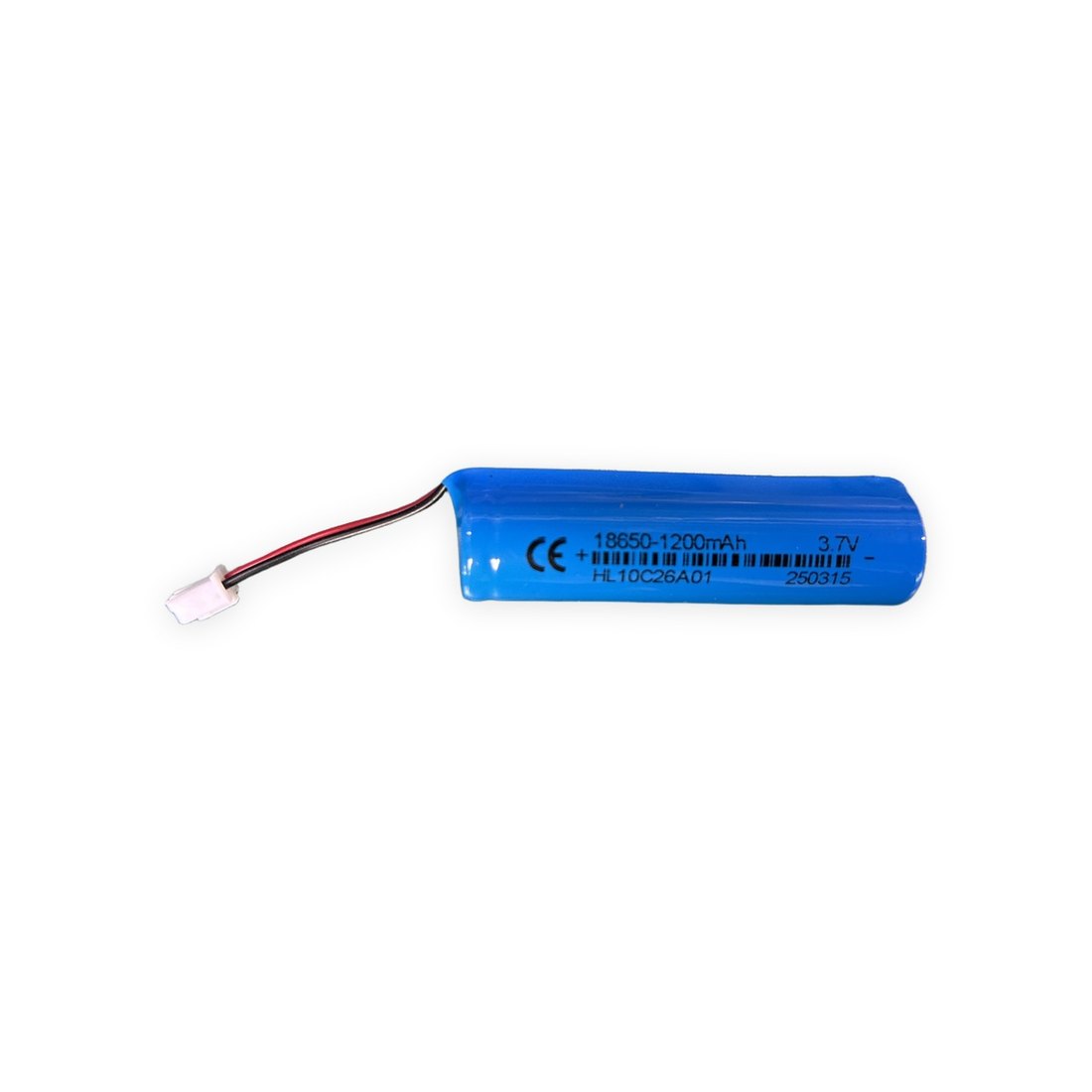
The 18650 is the industry standard part: abundant supply, transparent pricing, mature holders and nickel strips, low tooling cost. Its weakness is capacity per cell — a high-capacity pack needs more cells, which means more weld points and harder cell balancing.
Choose it for: size-constrained power tools and consumer devices where a proven, cost-controlled design matters more than maximum capacity.
3. When 21700 is worth the upgrade
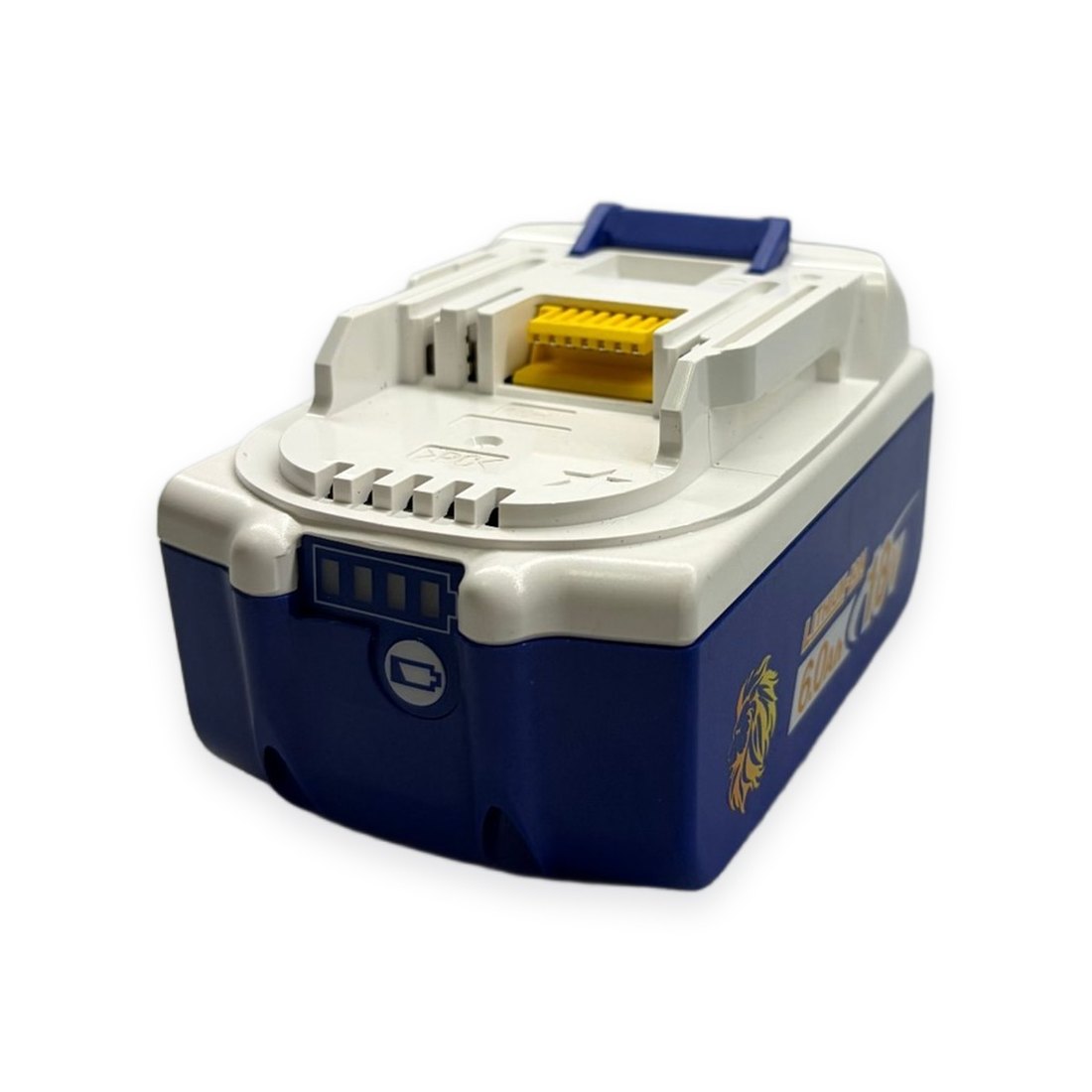
To build an 18V 6.0Ah pack, a 21700 design uses roughly 30 percent fewer cells than 18650 — fewer welds, simpler structure, lower internal resistance and less heat at high current. The trade-offs are a higher cost per cell and a redesigned enclosure.
Choose it for: power tools (especially high-drain models), e-bikes, and products where fewer, larger cells simplify assembly.
4. When only LiFePO4 will do
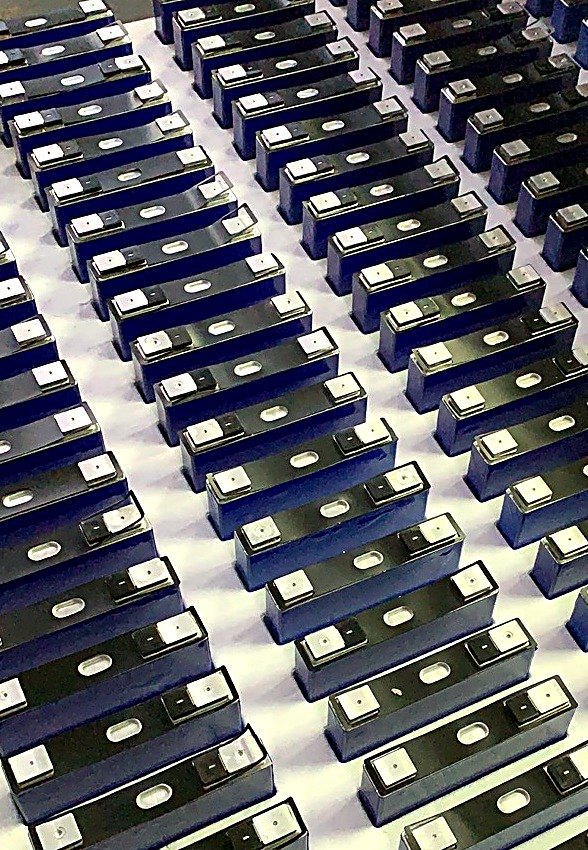
LiFePO4 has clearly lower energy density than NMC chemistry: the same capacity weighs more and takes more space. In exchange, cycle life is three to five times longer, thermal stability is better and the threshold for thermal runaway is higher. For storage applications cycled once a day, the lifetime cost is actually lower.
Choose it for: RV and marine storage, solar and off-grid systems, telecom backup and lead-acid replacement — applications that value ten years of service over a few kilos saved.
5. High-rate pouch cells: why drones need them
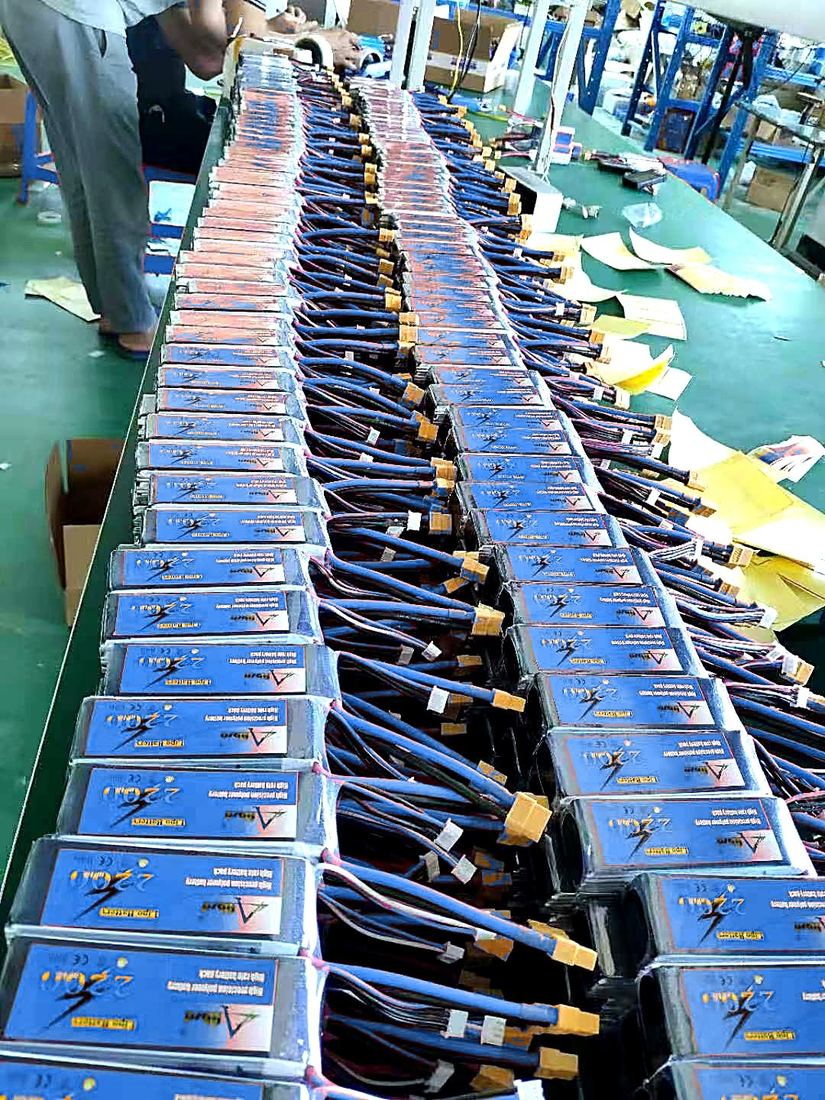
FPV racing and industrial drones demand huge instantaneous current — climbing and manoeuvring can pull tens or even hundreds of amps. Pouch tabs support 45C and beyond, up to 120C–160C in extreme grades, while weighing less than cylindrical cells. The cost is assembly complexity: firm fixturing, insulation and thermal design, and lower tolerance of mechanical shock.
6. The factory view: cell type is not the whole story
The same cell can perform very differently depending on how it is built. Four things we do in production matter as much as the cell type itself:
- Grading and matching by capacity and internal resistance — unmatched cells make the weakest one fail first and drag the whole pack down.
- Configuring BMS thresholds per application — over-current limits, balancing current and thermal cut-offs should not be one-size-fits-all.
- Current-carrying design: nickel strip width, number of welds and harness cross-section must match the target current.
- 100 percent full-load aging to screen out abnormal cells and weak welds before shipping.
7. Recommendation by application
| Application | First choice | Alternative | Why |
|---|---|---|---|
| Power tools | 21700 power | 18650 power | Balanced high current and cycle life |
| Drone / FPV | High-rate pouch | 21700 power | Discharge rate and weight |
| RV / marine storage | LiFePO4 prismatic | — | Cycle life and safety |
| Solar / off-grid | LiFePO4 prismatic | — | Lowest lifetime cost at daily cycling |
| Consumer electronics | Li-pouch | 18650 | Shape freedom and slim profile |
| E-bike | 21700 | LiFePO4 | Capacity versus weight |
If you are unsure which one fits, send us the device parameters: rated voltage, operating current, daily cycling, size and weight limits. We will lay out the trade-offs between two or three options, with cost ranges for each.
Not sure which cell fits your product?
Send your device parameters and we will reply within 24 hours with two or more options and their pricing.
Quick Inquiry
Product Catalogue
Browse the product lines we build — each links to its own page: